
FOR IMMEDIATE RELEASE
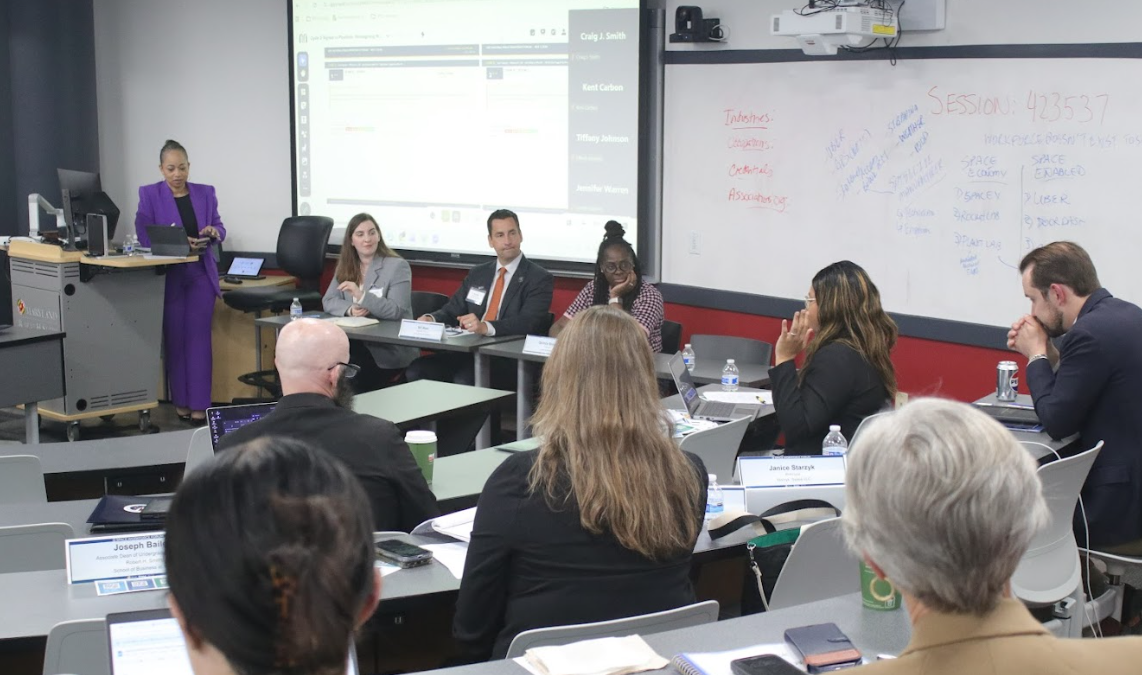
WASHINGTON, D.C., May 2026 — Space Workforce Institute (SWI) participated in the inaugural Space Workforce Forum hosted by the Office of Space Commerce at the University of Maryland’s Robert H. Smith School of Business on May 7, 2026. The forum convened leaders from industry, academia, government, and workforce development organizations to examine structural challenges and emerging solutions for building a resilient U.S. space workforce.
Representing SWI were Executive Director Bill West and Director of Customer Solutions Robert Zielinski, both of whom served as panelists in discussions focused on workforce pipeline development, education alignment, credentialing, and the evolving needs of the commercial space sector.
Bill West participated in the “Signal vs. Pipeline” panel, which examined why workforce signals from employers, academic institutions, and government stakeholders are not translating into scalable pipeline development at the pace required by the rapidly evolving space industry. The discussion centered on structural gaps between workforce demand and workforce preparation, including misalignment between industry timelines and traditional education and training cycles.
West emphasized the role professional credentialing can play to bring the industry together in order to build job role standards and valid, reliable credentials that create pathways into the space economy from any stage of education or career, and keep up with the rapid pace of change. He also underscored that talent is critical to helping the industry reach its full potential and is too often treated as an afterthought.
Robert Zielinski participated in the Academic Cycle panel, which focused on institutional perspectives on space education ecosystems and the challenges of translating academic preparation into workforce readiness. The panel explored the widening gap between traditional four-year degree timelines and the immediate and evolving skill needs of the space industry.
Discussion points included the difficulty academic institutions face in adapting curricula, accreditation systems, and program structures at the speed required by commercial space growth, as well as the impact of funding cycles and institutional constraints on responsiveness to industry change. The panel also examined emerging approaches to addressing these gaps, including industry-academic partnerships, corporate-led workforce development programs, and alternative credentialing and certification pathways.
Across both sessions, SWI representatives contributed to a broader dialogue on how to strengthen alignment between education systems and industry needs, with a shared focus on improving agility, accessibility, and responsiveness in space workforce development.
The Space Workforce Forum served as a structured listening session designed to gather insights from stakeholders actively engaged in shaping the future space workforce. Outcomes from the forum are expected to inform ongoing discussions around workforce strategy and ecosystem development within the U.S. space industrial base.